

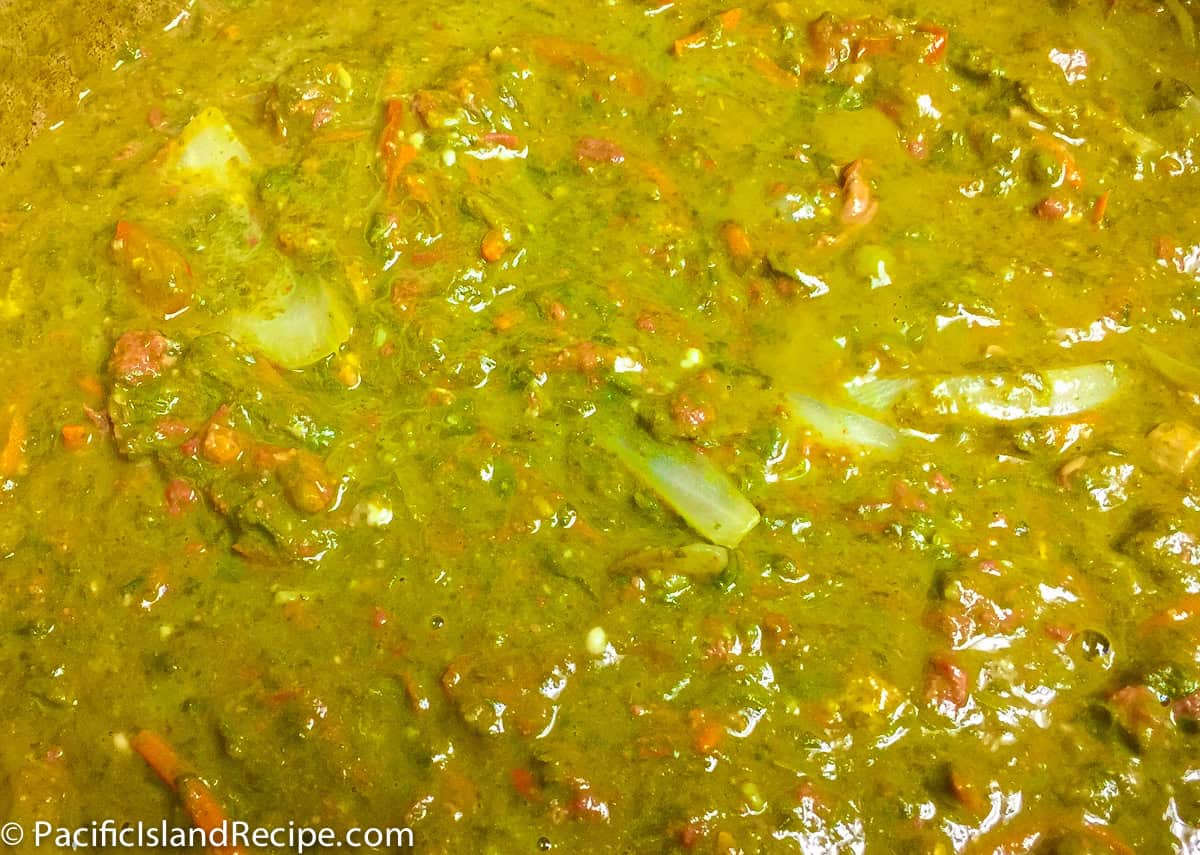
Rourou is a rich taro leaf dish cooked down with coconut cream until the leaves turn silky and tender. This version keeps the ingredient list simple and gives you a practical home method for a Fiji-style side or light main.
Start here
Rourou is a rich taro leaf dish cooked down with coconut cream until the leaves turn silky and tender. This version keeps the ingredient list simple and gives you a practical home method for a Fiji-style side or light main.
Want more Pacific recipes?
Subscribe for new island dishes, desserts, and weeknight ideas as they publish.
Ingredients
- 2 packed bowls young taro leaves, washed and finely chopped
- 1 cup coconut cream
- 1 small onion, finely chopped
- 1 teaspoon chopped garlic
- Salt, to taste
- 1 small tomato, chopped (optional)
- 1 chopped chilli (optional)
- 1/2 cup canned meat or cooked corned beef (optional)
Steps
- Wash the taro leaves well, remove any tough stems, and chop the leaves finely.
- Place a pot over medium heat and cook the onion and garlic with a small splash of water or oil until softened.
- Add the chopped taro leaves and stir until they begin to wilt down.
- Pour in the coconut cream, season lightly with salt, and add the tomato, chilli, or canned meat if you are using them.
- Reduce the heat and simmer gently, stirring from time to time, until the leaves are fully tender and the mixture is thick and creamy.
- Taste, adjust the seasoning, and serve warm with rice, fish, or roast root crops.
Nutrition
This page includes a per-serving nutrition table below the main content so readers can scan calories, macros, and key nutrition details without leaving the recipe.
Tips And Substitutions
Helpful tips
- Cook the taro leaves until completely tender so the finished dish tastes mellow and creamy.
- If you want a thicker finish, simmer uncovered for the last few minutes.
- For a lighter version, use a mix of coconut cream and thin coconut milk.
Substitutions and variations
- Use spinach only if taro leaves are unavailable, but expect a milder flavor and softer texture.
- Corned beef or canned meat can turn rourou into a fuller meal.
- Fresh chilli is optional, so leave it out for a gentler family-style pot.
Serve It With
These recipes pair naturally with this page and give readers a better path into the rest of the archive.
Make kokoda with fresh fish, lemon or lime juice, coconut milk, and chopped vegetables for a bright Fiji marinated fish recipe with island flavor.
View recipeMake nama salad with fresh sea grapes, tomato, onion, herbs, and a light island-style dressing for a refreshing Fiji seafood side.
Related Recipes


Learn how to make a lovo at home with meat, root crops, leaves, and hot stones in a traditional Fiji earth-oven cooking method.
View recipeFAQ
Can I make rourou without meat?
Yes. The coconut cream and taro leaves alone make a traditional and satisfying vegetarian version.
How do I know the taro leaves are done?
The leaves should be fully softened and the coconut mixture should look creamy rather than watery.
What goes well with rourou?
Serve it with rice, baked fish, kokoda, grilled meat, or lovo-style root crops.
About This Version
This page keeps the dish close to the Fiji home-cooking style used for coconut-based taro leaf dishes, with optional pantry add-ins that are common in family kitchens.
More Taro And Fiji Favorites
Use these hand-picked links to browse the site by ingredient, meal type, and regional cooking style.
Learn what taro root is, how it tastes, how it is cooked, and why it matters in Pacific Island food, from staple meals to traditional dishes.
View recipeLearn how to make a lovo at home with meat, root crops, leaves, and hot stones in a traditional Fiji earth-oven cooking method.
View recipeMake kokoda with fresh fish, lemon or lime juice, coconut milk, and chopped vegetables for a bright Fiji marinated fish recipe with island flavor.
View recipeMake nama salad with fresh sea grapes, tomato, onion, herbs, and a light island-style dressing for a refreshing Fiji seafood side.
Popular Recipes
Nutrition Facts (per serving)
| Nutrient | Amount per Serving |
|---|---|
| Calories | 145 kcal |
| Fat | 12.1 g |
| Saturated Fat | 10.4 g |
| Carbohydrates | 6.8 g |
| Protein | 3.1 g |
| Sodium | 120 mg |
| Cholesterol | 0 mg |
Cook Next




Comments
One response to “Rourou Recipe (Taro Leaves in Coconut Cream)”
[…] Lamb Rourou served with Boiled Cassava (FJD16.95) – This dish, reminiscent of Filipino laing but with its own twist, featured taro leaves cooked in coconut milk. The result was a rich and meaty flavour, distinct from the spicier and creamier Filipino version. Chunks of lamb with bones added depth to the dish, and the boiled cassava was both hearty and nostalgic. […]