admin

  • Te Bua Toro Recipe

    Te Bua Toro Recipe

    Te Bua Toro Recipe

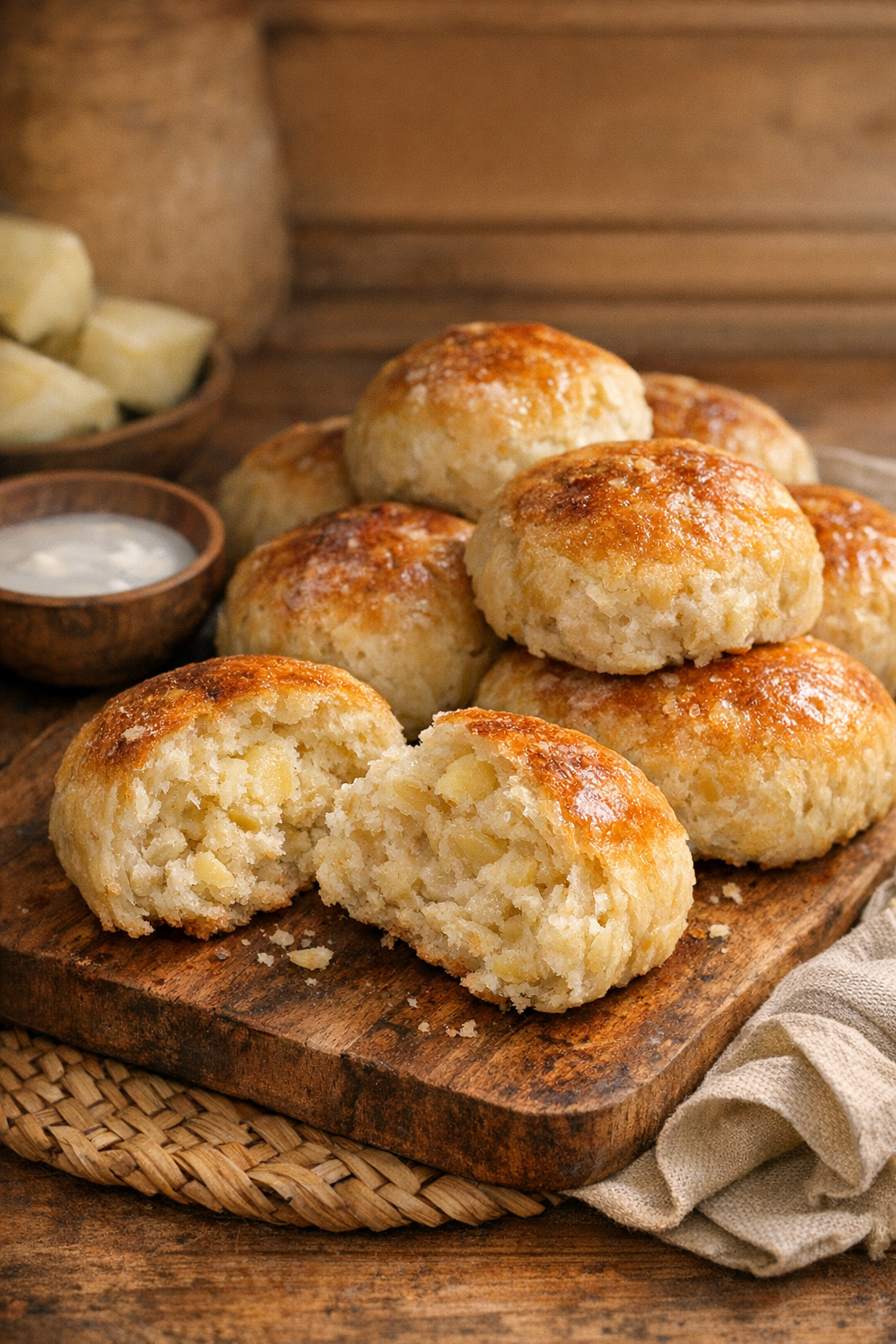
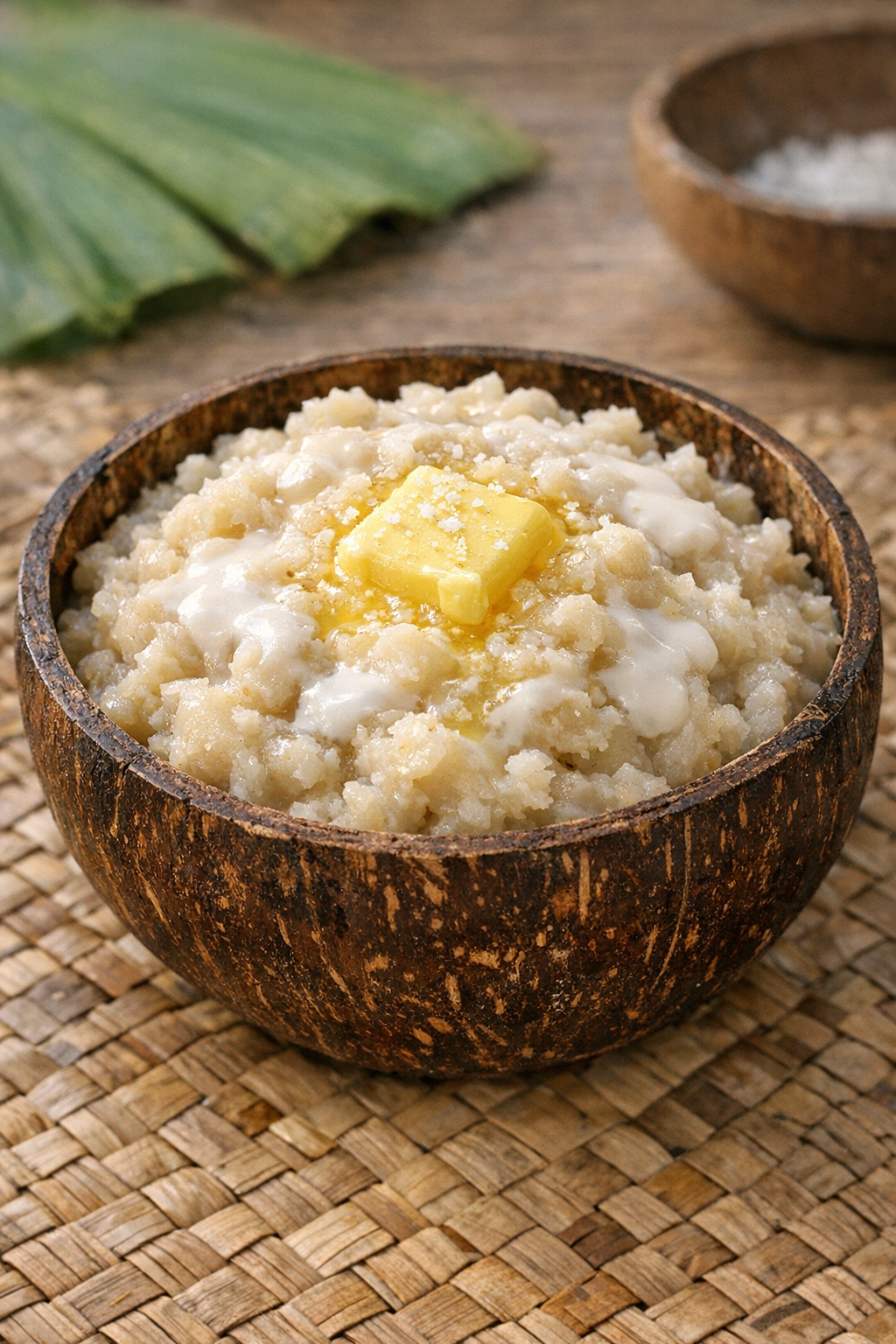
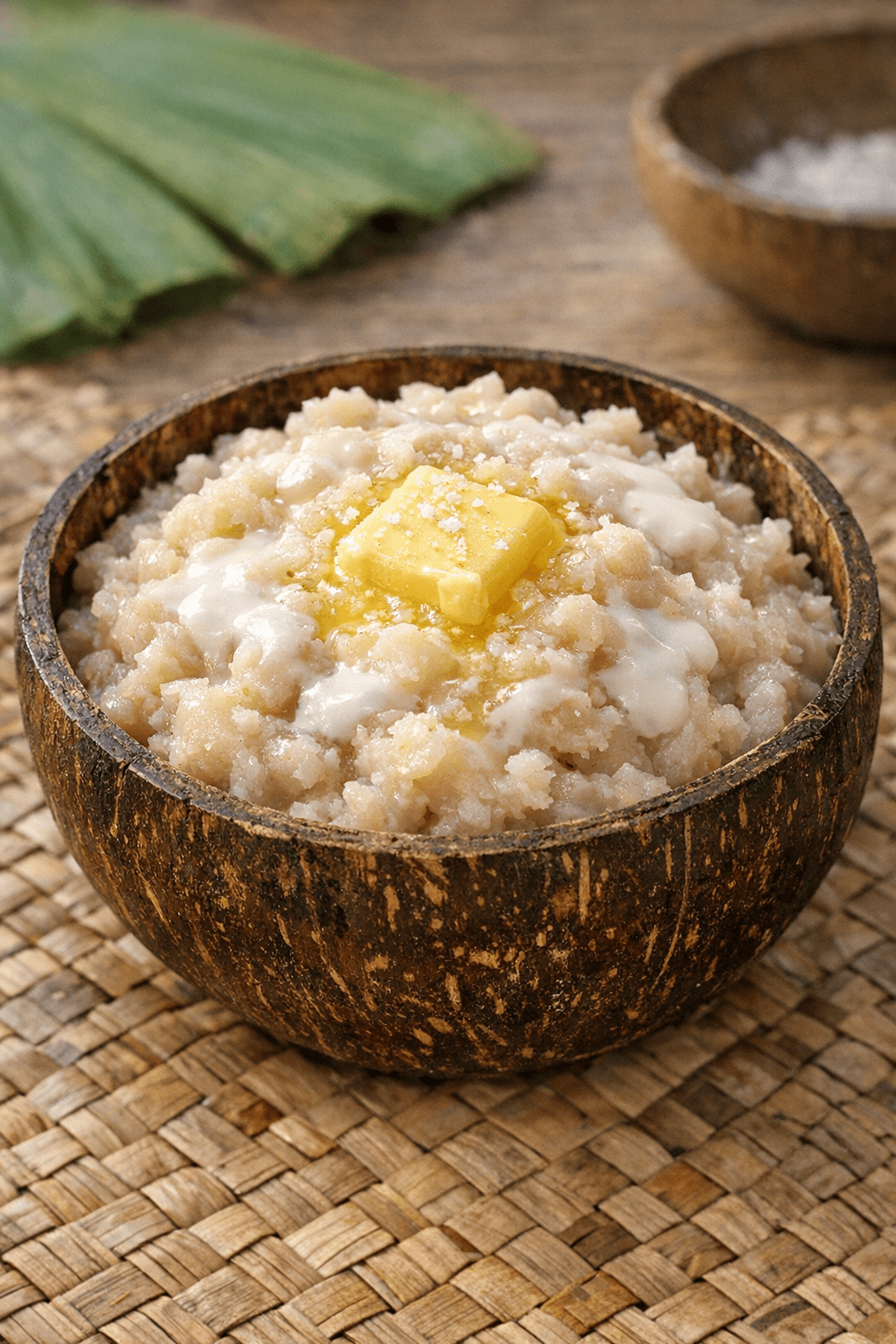
    Te bua toro gives the site a Kiribati page with a specific island name, which helps the archive reach further across the central Pacific. It keeps the expansion grounded in named local dishes instead of turning every addition into a generic coconut recipe.

    If you enjoy this style of Pacific cooking, you may also want to try nalot, koon breadfruit.

    Ingredients

    • 2 cups local starch ingredient such as taro or breadfruit, mashed
    • 1/2 cup coconut cream
    • 1 tablespoon butter
    • 1 pinch salt

    Instructions

    1. Prepare and mash the starch ingredient until soft.
    2. Mix in coconut cream, butter, and salt.
    3. Warm gently until the mixture is cohesive.
    4. Adjust texture with a small amount of water if needed.
    5. Serve hot.

    Helpful Tips

    • The texture should be soft and rich rather than dry.
    • Keep the seasoning simple so the coconut remains prominent.

    FAQ

    Can different root crops be used?

    Yes, island households often adapt dishes based on what is available.

    Is this a main dish?

    It works best as a staple side or supporting dish.

    Nutrition Facts (per serving)

    NutrientAmount per Serving
    Calories0 kcal
    Fat8 g
    Saturated Fat5.9 g
    Carbohydrates22.9 g
    Protein5.9 g
    Sodium9991.5 mg
    Cholesterol8.8 mg
  • Koon Breadfruit Recipe

    Koon Breadfruit Recipe

    Koon Breadfruit Recipe

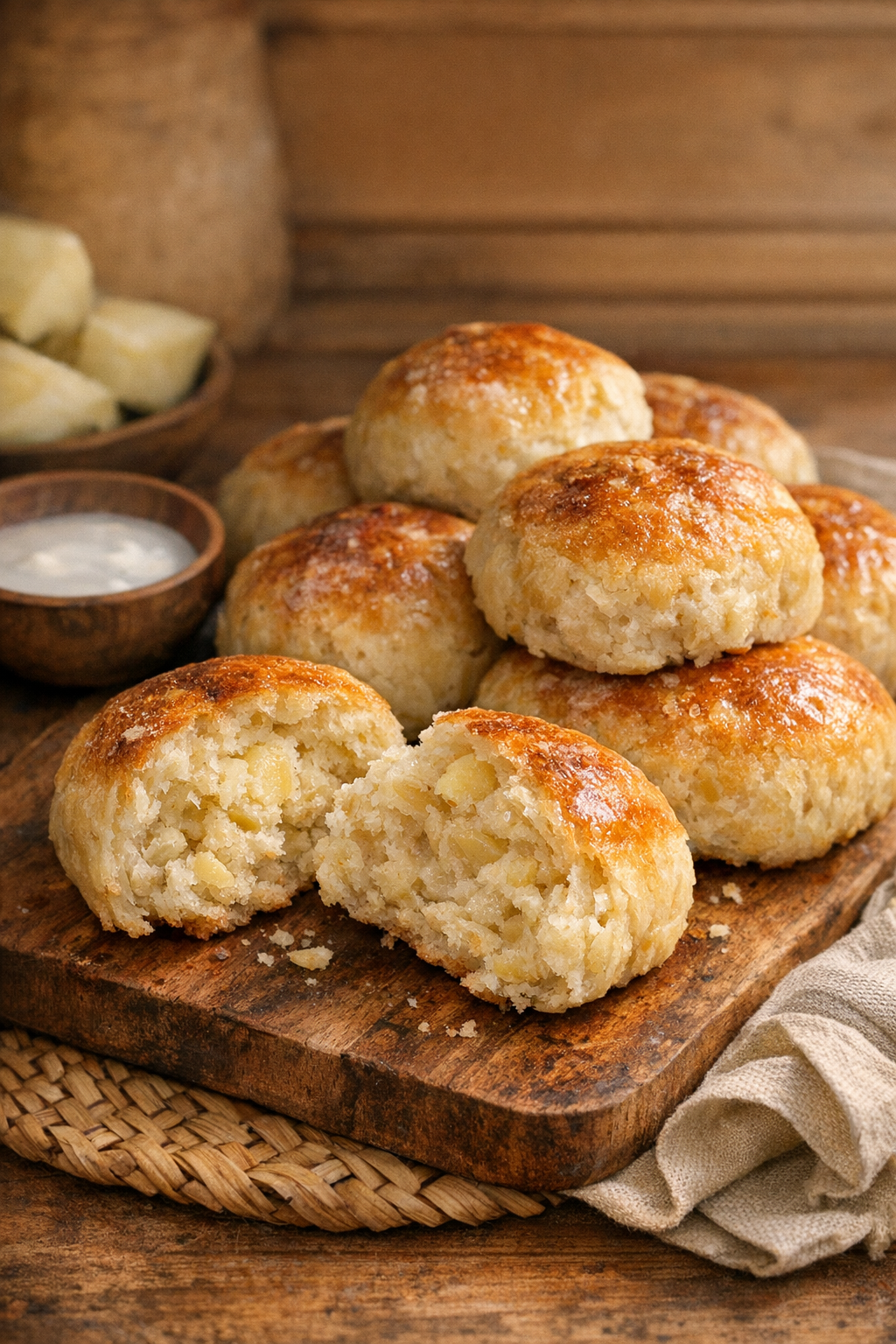
    Koon breadfruit adds another Micronesian breadfruit page and helps cover the softer, staple-style side of root and fruit starch cooking. It keeps the archive from turning breadfruit into only fries, mash, and Westernized sides.

    If you enjoy this style of Pacific cooking, you may also want to try gollai appan lemmai, breadfruit mash.

    Ingredients

    • 3 cups breadfruit, peeled and cubed
    • 1/2 cup coconut milk
    • 1 tablespoon butter
    • 1 pinch salt

    Instructions

    1. Cook the breadfruit until fully tender.
    2. Drain and mash until smooth or lightly textured.
    3. Stir in the coconut milk, butter, and salt.
    4. Cook briefly over low heat until the mixture comes together.
    5. Serve warm.

    Helpful Tips

    • Do not leave hard pieces in the mash.
    • Use just enough coconut milk to enrich without making it soupy.

    FAQ

    Is this more like mash or pudding?

    It is closer to a savory mash or staple side dish.

    Can it be eaten with fish?

    Yes, it pairs well with grilled or coconut-based seafood.

    Nutrition Facts (per serving)

    NutrientAmount per Serving
    Calories0 kcal
    Fat7.7 g
    Saturated Fat5.9 g
    Carbohydrates17.7 g
    Protein6.4 g
    Sodium9717 mg
    Cholesterol8.8 mg
  • Tulolo Recipe

    Tulolo Recipe

    Tuvalu Recipe Upgrade

    Tulolo broadens the dessert archive with a Tuvalu coconut sweet. The upgraded layout gives dessert readers clearer instructions and stronger links into cassava, coconut, and Pacific pudding pages.

    By Pacific Island Recipe · Updated April 24, 2026

    Tulolo Recipe

    Start here

    Tulolo broadens the dessert archive with a Tuvalu coconut sweet. The upgraded layout gives dessert readers clearer instructions and stronger links into cassava, coconut, and Pacific pudding pages.

    Try next:

    Want more Pacific recipes?

    Subscribe for new island dishes, desserts, and weeknight ideas as they publish.

    Get island recipes by email

    New Pacific recipes, island desserts, and practical home-cooking ideas straight to your inbox.

    Ingredients

    • 1 cup starch such as tapioca or arrowroot
    • 1 cup coconut cream
    • 1/3 cup sugar
    • 1/2 cup water
    • 1 pinch salt

    Steps

    1. Mix the starch with water until smooth.
    2. Warm the coconut cream with sugar and a pinch of salt.
    3. Stir the starch mixture into the warm coconut cream.
    4. Cook gently until thick and glossy.
    5. Serve warm or chilled.

    Nutrition

    This page includes a per-serving nutrition table below the main content so readers can scan calories, macros, and key nutrition details without leaving the recipe.

    Tips And Substitutions

    Helpful tips

    • Read the full method once before cooking so the timing and texture make sense.
    • Taste and adjust salt, acidity, coconut richness, or heat near the end instead of at the start.
    • Serve the dish while the main texture is still at its best, especially for seafood, greens, and coconut sauces.

    Substitutions and variations

    • Use the closest fresh local ingredient when the exact island ingredient is difficult to find.
    • Coconut milk can usually be made richer with coconut cream or lighter with a little water.
    • Keep chilli optional when cooking for a mixed table, then serve extra heat on the side.

    Serve It With

    These recipes pair naturally with this page and give readers a better path into the rest of the archive.

    FAQ

    Can I make this recipe ahead?

    You can usually prep the ingredients ahead, but the final cooking or dressing step is best done close to serving.

    What should I serve with it?

    Rice, root crops, coconut sides, seafood, salads, or another Pacific recipe from the cluster links all work well.

    Can I adjust the coconut flavor?

    Yes. Use coconut cream for a richer finish or a lighter coconut milk when you want the dish less heavy.

    About This Version

    This page was selected for a revenue upgrade because Search Console already showed reader demand, so the layout now gives visitors a stronger recipe path and better links into related Pacific dishes.

    More Coconut Island Desserts

    Use these hand-picked links to browse the site by ingredient, meal type, and regional cooking style.

    Nutrition Facts (per serving)

    NutrientAmount per Serving
    Calories145 kcal
    Fat6.7 g
    Saturated Fat4.2 g
    Carbohydrates44.2 g
    Protein10.1 g
    Sodium5096.6 mg
    Cholesterol5.4 mg
  • Bwiro Recipe

    Bwiro Recipe

    Bwiro Recipe

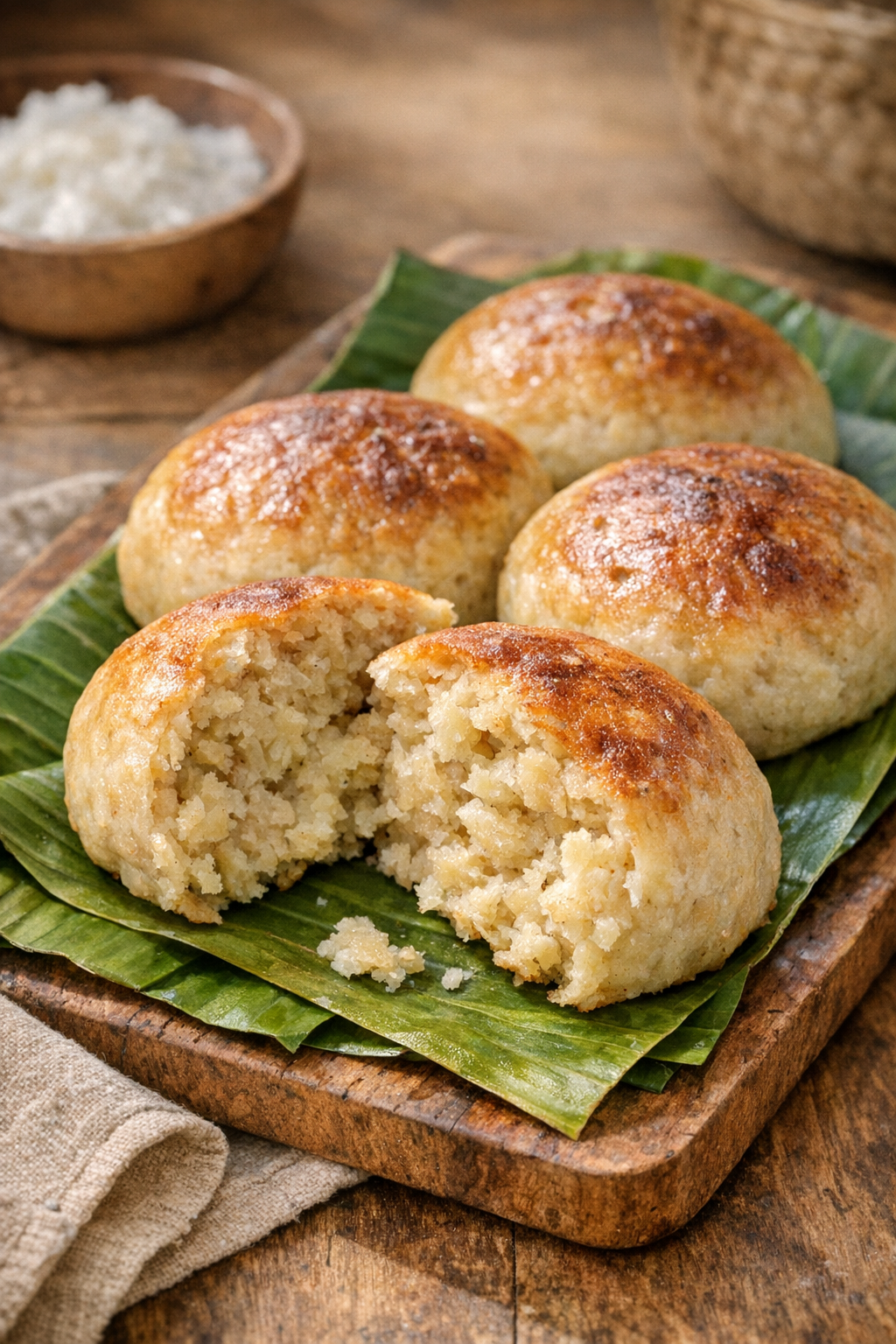
    Bwiro gives the site a stronger Marshall Islands anchor and adds a breadfruit dish that is more preservation-focused and traditional than the easier mash and chowder recipes. It helps the archive represent how Pacific foodways handle abundance and storage, not just fresh cooking.

    If you enjoy this style of Pacific cooking, you may also want to try breadfruit mash, coconut breadfruit bake.

    Ingredients

    • 4 cups mashed breadfruit
    • 1/2 cup coconut cream
    • 1 pinch salt
    • Banana leaves or a greased baking dish

    Instructions

    1. Prepare the breadfruit mash until smooth.
    2. Mix in coconut cream and a pinch of salt.
    3. Transfer to a banana-leaf-lined dish or baking pan.
    4. Bake until set and lightly colored on top.
    5. Cool slightly before slicing and serving.

    Helpful Tips

    • This is best approached as a dense island staple rather than a fluffy bread.
    • A banana-leaf lining helps the finished dish feel more traditional.

    FAQ

    Is bwiro sweet or savory?

    It usually leans savory or neutral, with the breadfruit and coconut doing most of the flavor work.

    What makes it different from breadfruit mash?

    Bwiro is a denser baked preparation tied to preserved breadfruit traditions.

    Nutrition Facts (per serving)

    NutrientAmount per Serving
    Calories165 kcal
    Fat3.4 g
    Saturated Fat2.9 g
    Carbohydrates56 g
    Protein5.1 g
    Sodium6462.6 mg
    Cholesterol0 mg
  • Nalot Recipe

    Nalot Recipe

    Nalot Recipe

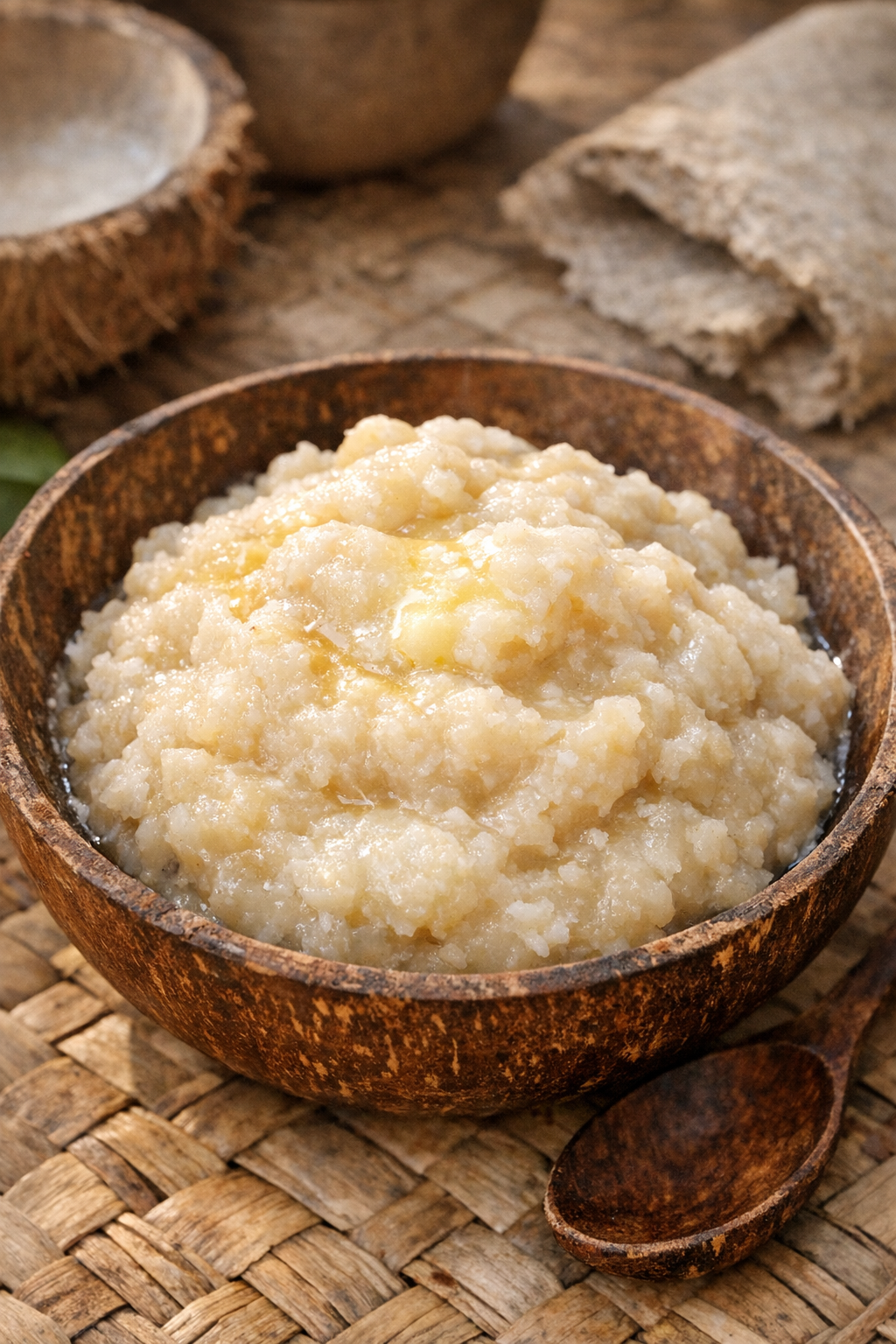
    Nalot gives the archive another Vanuatu root-crop staple and helps show the pounded-starch side of Pacific food culture. It broadens the site beyond baked and boiled roots by adding a dish centered on texture and method.

    If you enjoy this style of Pacific cooking, you may also want to try breadfruit mash, green banana coconut mash.

    Ingredients

    • 3 cups cooked root crop such as breadfruit or taro
    • 2 tablespoons coconut cream
    • 1 tablespoon butter
    • 1 pinch salt

    Instructions

    1. Cook the root crop until very soft.
    2. Pound or mash until smooth and stretchy.
    3. Mix in the coconut cream, butter, and salt.
    4. Work the mixture until it is cohesive.
    5. Serve warm.

    Helpful Tips

    • The root crop should be very soft before pounding.
    • Serve immediately for the best texture.

    FAQ

    What is nalot closest to?

    It is closest to a pounded root dish where texture matters as much as flavor.

    Can it be made with different root crops?

    Yes, island households vary the root used depending on season and preference.

    Nutrition Facts (per serving)

    NutrientAmount per Serving
    Calories0 kcal
    Fat4.2 g
    Saturated Fat2.8 g
    Carbohydrates4.4 g
    Protein3.9 g
    Sodium9730 mg
    Cholesterol8.8 mg
  • Mumu Feast Recipe

    Mumu Feast Recipe

    Mumu Feast Recipe

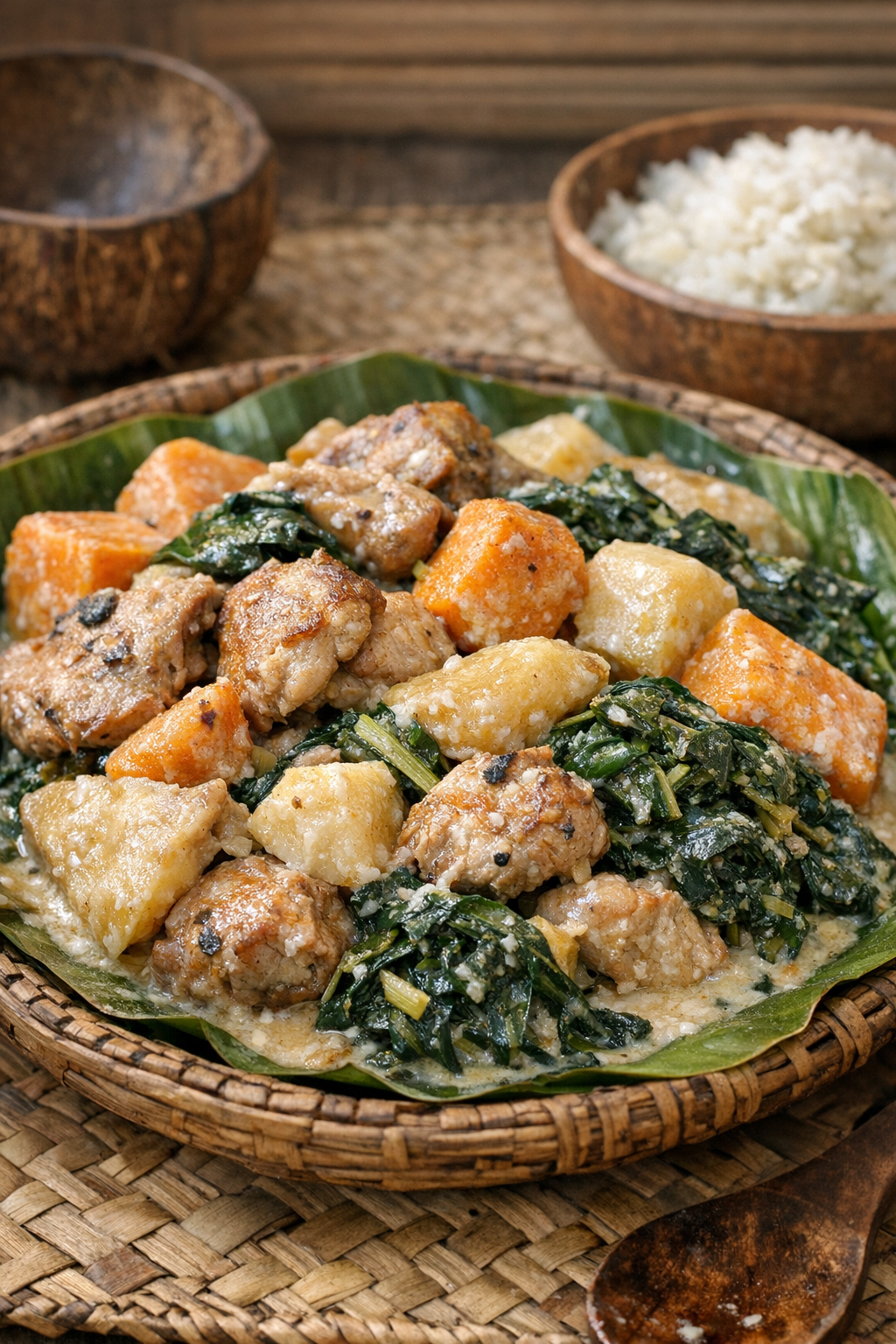
    Mumu feast gives the site a Papua New Guinea earth-oven style page that represents the communal cooking side of Pacific food more clearly. It works as a practical home-style approximation rather than pretending every reader is cooking in a full pit oven.

    If you enjoy this style of Pacific cooking, you may also want to try how to make a lovo, laplap.

    Ingredients

    • 2 pounds chicken or pork pieces
    • 3 cups root vegetables, cut into chunks
    • 2 cups greens
    • 1 cup coconut milk
    • Salt to taste

    Instructions

    1. Layer the meat, root vegetables, and greens in a roasting dish or foil packet.
    2. Season lightly and pour over the coconut milk.
    3. Cover tightly.
    4. Bake until the meat is tender and the vegetables are soft.
    5. Serve hot as a shared meal.

    Helpful Tips

    • Keep the dish tightly covered so it steams properly.
    • Choose root crops that cook at a similar speed.

    FAQ

    Is this a real earth oven mumu?

    This version is a home-kitchen approximation of the same broad feast style.

    Can the meat be changed?

    Yes, chicken and pork are both good starting points.

    Nutrition Facts (per serving)

    NutrientAmount per Serving
    Calories0 kcal
    Fat17.1 g
    Saturated Fat8 g
    Carbohydrates27.3 g
    Protein36.6 g
    Sodium6809.5 mg
    Cholesterol123.5 mg
  • Aigir Recipe

    Aigir Recipe

    Aigir Recipe

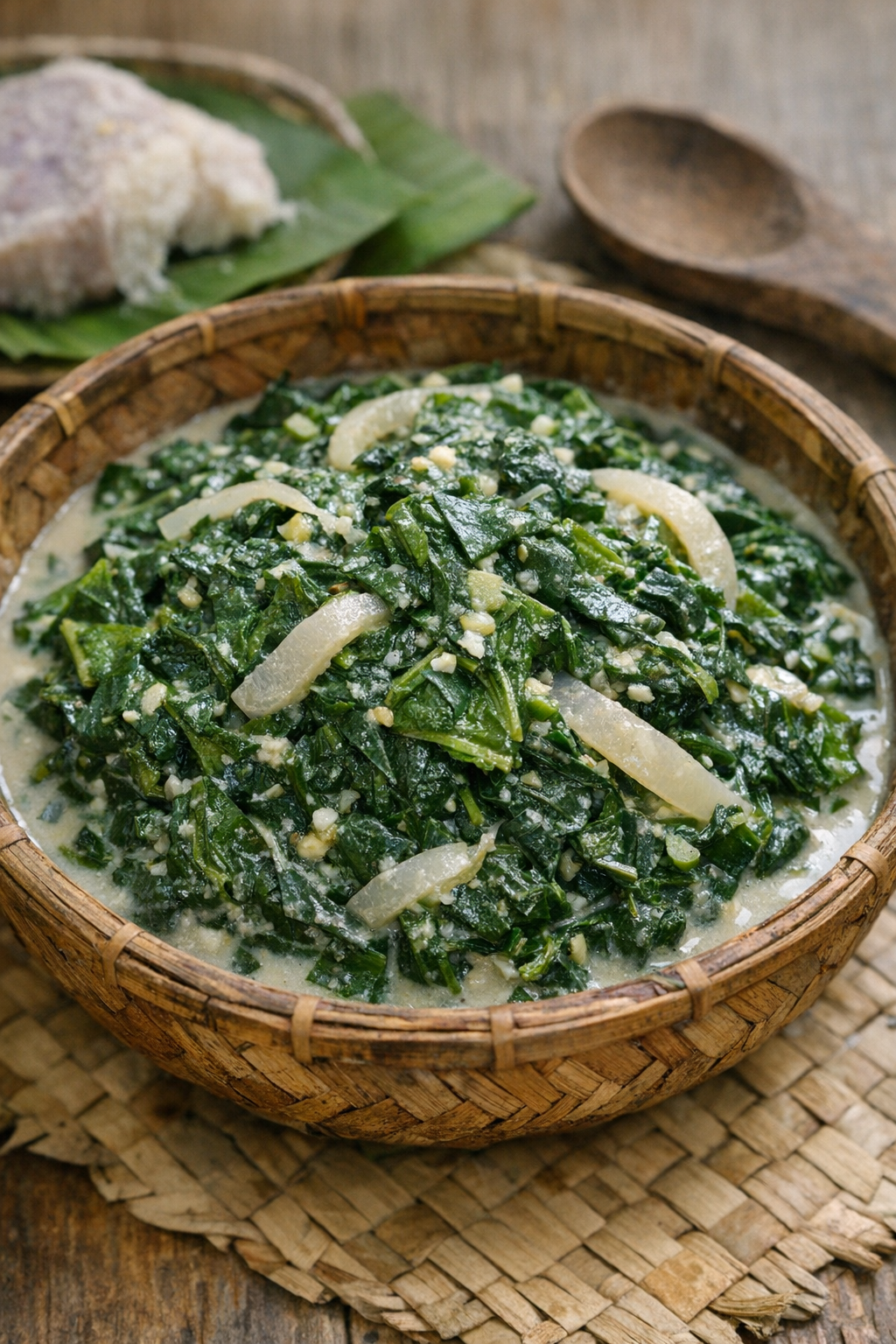
    Aigir gives the greens section a clearer Papua New Guinea identity and broadens the coconut-greens lane beyond taro leaves alone. It helps the archive represent more of the vegetable side of Pacific food culture.

    If you enjoy this style of Pacific cooking, you may also want to try gollai hagon suni, island greens lolo.

    Ingredients

    • 4 cups leafy greens, chopped
    • 1 cup coconut milk
    • 1/2 onion, sliced
    • 1 clove garlic, minced
    • Salt to taste

    Instructions

    1. Cook the onion and garlic briefly until softened.
    2. Add the greens and stir until they begin to wilt.
    3. Pour in the coconut milk.
    4. Simmer gently until the greens are tender.
    5. Season lightly and serve hot.

    Helpful Tips

    • Do not overcook the greens into a dull mash.
    • Keep the coconut milk at a gentle simmer.

    FAQ

    What greens can be used?

    Local edible greens vary, but the method works with sturdy island greens.

    Is this served with starch?

    Yes, it pairs naturally with taro, yam, cassava, or rice.

    Nutrition Facts (per serving)

    NutrientAmount per Serving
    Calories36 kcal
    Fat9.6 g
    Saturated Fat8.4 g
    Carbohydrates53.6 g
    Protein15.3 g
    Sodium10377.6 mg
    Cholesterol0 mg
  • Saksak Recipe

    Saksak Recipe

    Saksak Recipe

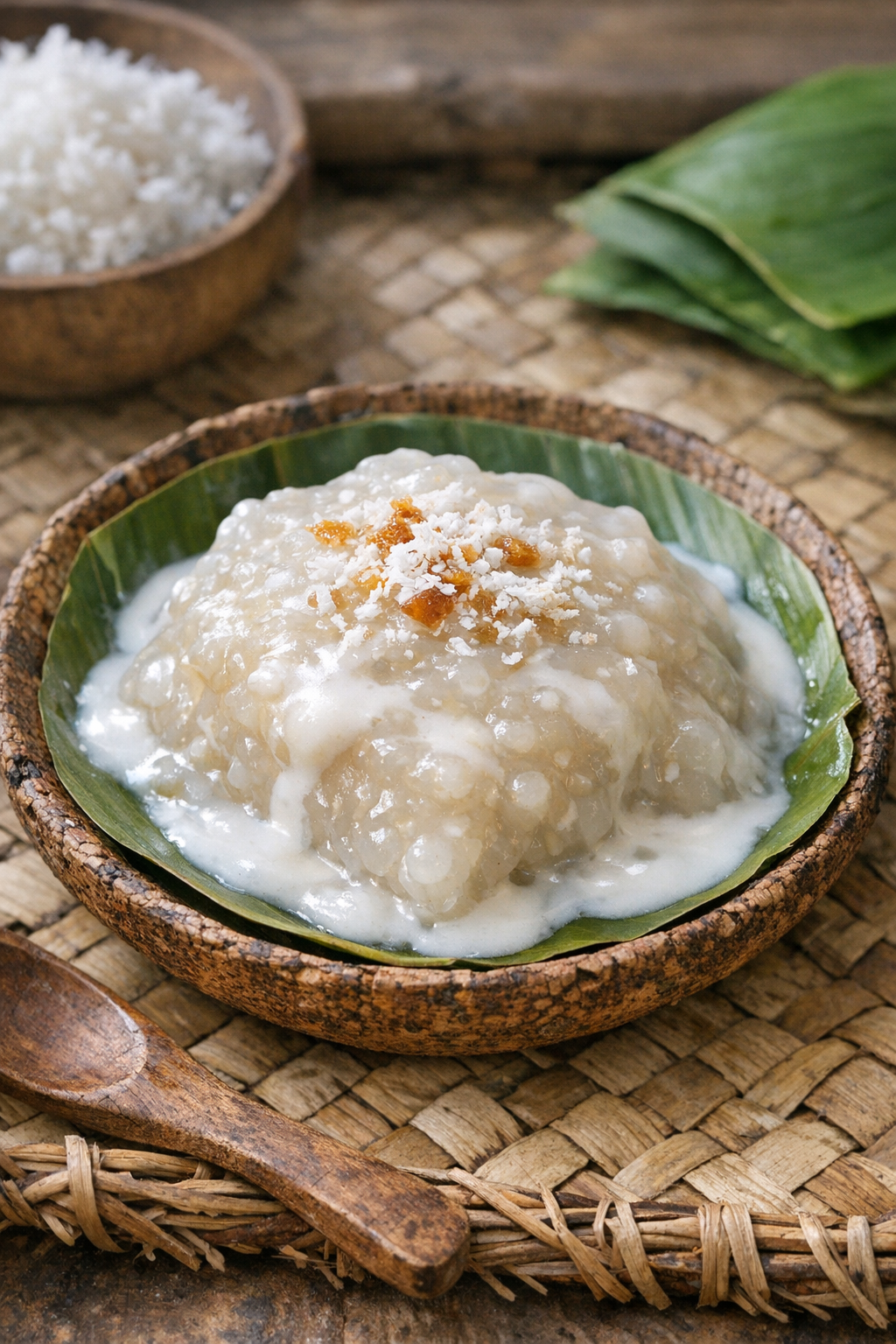
    Saksak gives the dessert archive a stronger Papua New Guinea anchor and helps represent sago more clearly, not just cassava and taro. It adds a traditional sweet that feels genuinely useful for people looking beyond the more familiar islands.

    If you enjoy this style of Pacific cooking, you may also want to try faikakai topai, faikai noa.

    Ingredients

    • 1 cup sago starch
    • 1/2 cup water
    • 1 cup coconut cream
    • 1/4 cup sugar
    • 1 pinch salt

    Instructions

    1. Mix the sago starch with enough water to form a soft dough.
    2. Shape into small dumplings.
    3. Cook the dumplings until set.
    4. Warm the coconut cream with sugar and a pinch of salt.
    5. Serve the dumplings with the sweet coconut cream.

    Helpful Tips

    • Add water slowly so the dough does not become too wet.
    • Serve warm for the softest texture.

    FAQ

    Is this similar to topai?

    They share a dumpling-and-sauce comfort, but saksak is tied more specifically to sago and Papua New Guinea.

    Can the sauce be less sweet?

    Yes, reduce the sugar if you want the coconut flavor to lead more strongly.

    Nutrition Facts (per serving)

    NutrientAmount per Serving
    Calories152 kcal
    Fat7.4 g
    Saturated Fat5.7 g
    Carbohydrates53.7 g
    Protein11.6 g
    Sodium6749.9 mg
    Cholesterol7.2 mg
  • Tuluk Recipe

    Tuluk Recipe

    Vanuatu Recipe Upgrade

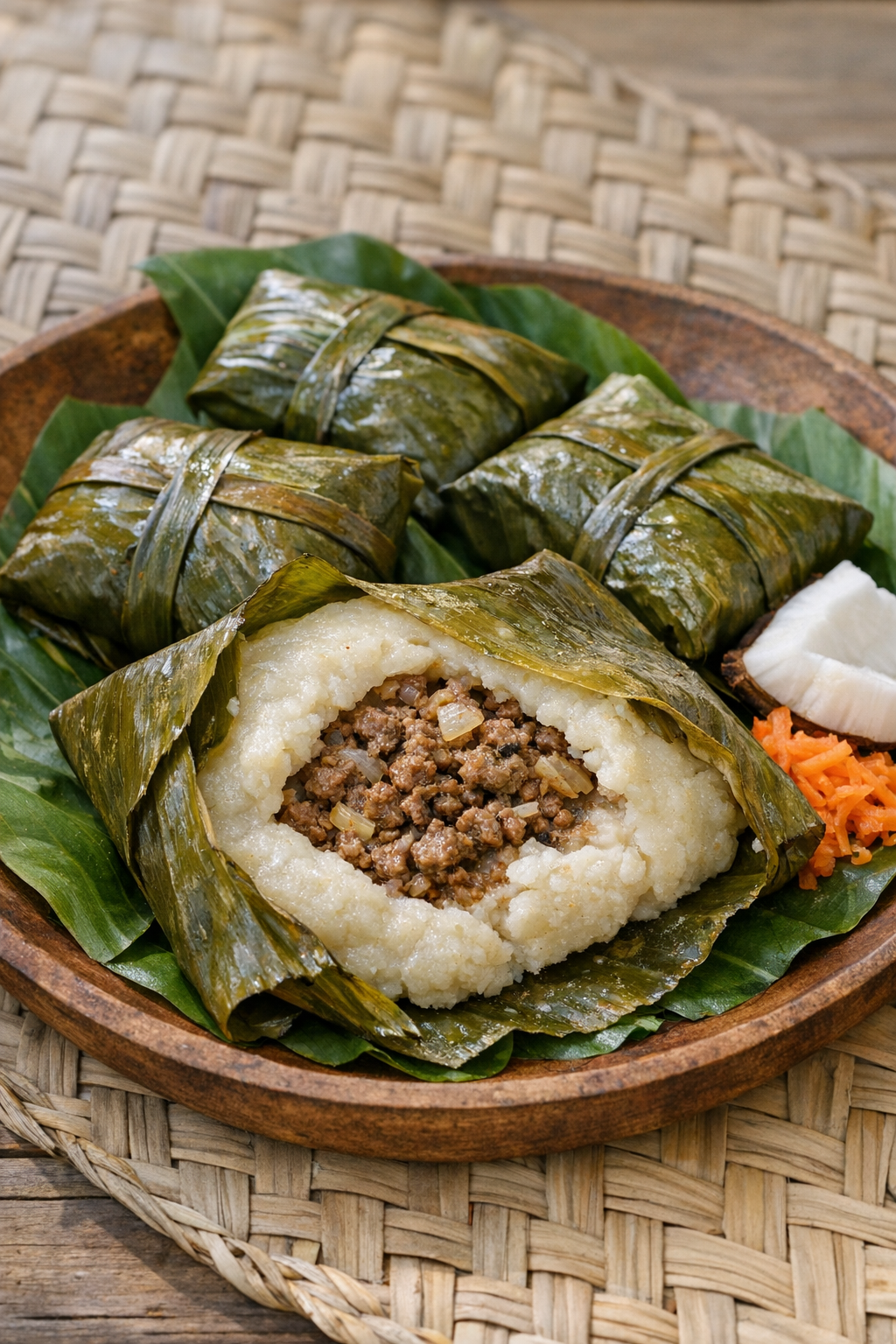
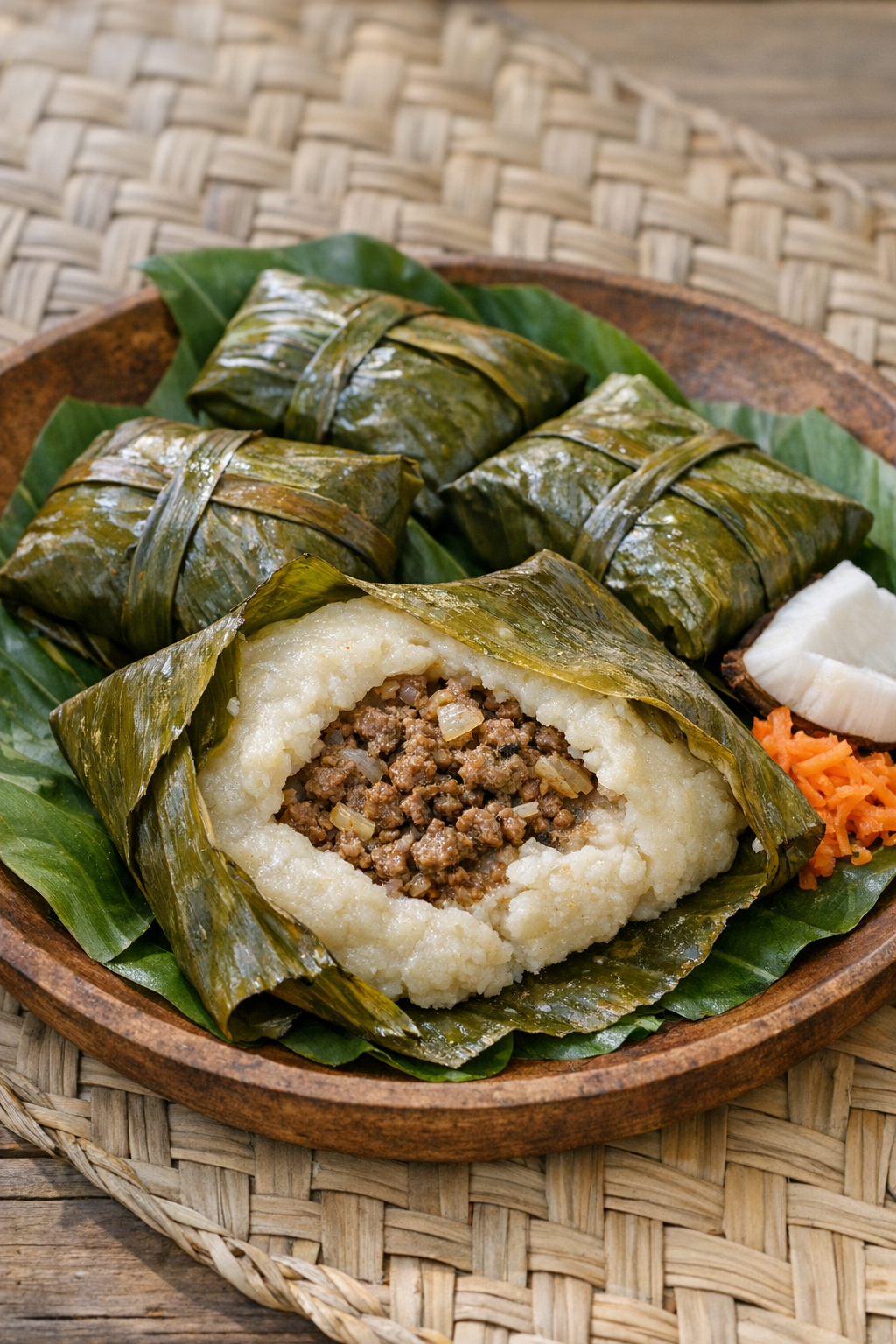
    Tuluk gives the site a Vanuatu wrapped-food page with good ranking position. The upgrade strengthens its recipe structure and links it into parcel, taro, and island starch recipes.

    By Pacific Island Recipe · Updated April 24, 2026

    Tuluk Recipe

    Start here

    Tuluk gives the site a Vanuatu wrapped-food page with good ranking position. The upgrade strengthens its recipe structure and links it into parcel, taro, and island starch recipes.

    Try next:

    Want more Pacific recipes?

    Subscribe for new island dishes, desserts, and weeknight ideas as they publish.

    Get island recipes by email

    New Pacific recipes, island desserts, and practical home-cooking ideas straight to your inbox.

    Ingredients

    • 3 cups grated yam or taro
    • 1 cup cooked minced meat or savory filling
    • 1/2 onion, chopped
    • Banana leaves for wrapping
    • Salt to taste

    Steps

    1. Prepare the grated yam or taro and season lightly.
    2. Place a portion on softened banana leaf and add the filling in the center.
    3. Cover with more grated yam mixture and wrap into a parcel.
    4. Steam or bake until the starch is cooked through.
    5. Serve hot.

    Nutrition

    This page includes a per-serving nutrition table below the main content so readers can scan calories, macros, and key nutrition details without leaving the recipe.

    Tips And Substitutions

    Helpful tips

    • Read the full method once before cooking so the timing and texture make sense.
    • Taste and adjust salt, acidity, coconut richness, or heat near the end instead of at the start.
    • Serve the dish while the main texture is still at its best, especially for seafood, greens, and coconut sauces.

    Substitutions and variations

    • Use the closest fresh local ingredient when the exact island ingredient is difficult to find.
    • Coconut milk can usually be made richer with coconut cream or lighter with a little water.
    • Keep chilli optional when cooking for a mixed table, then serve extra heat on the side.

    Serve It With

    These recipes pair naturally with this page and give readers a better path into the rest of the archive.

    FAQ

    Can I make this recipe ahead?

    You can usually prep the ingredients ahead, but the final cooking or dressing step is best done close to serving.

    What should I serve with it?

    Rice, root crops, coconut sides, seafood, salads, or another Pacific recipe from the cluster links all work well.

    Can I adjust the coconut flavor?

    Yes. Use coconut cream for a richer finish or a lighter coconut milk when you want the dish less heavy.

    About This Version

    This page was selected for a revenue upgrade because Search Console already showed reader demand, so the layout now gives visitors a stronger recipe path and better links into related Pacific dishes.

    More Wrapped And Taro Recipes

    Use these hand-picked links to browse the site by ingredient, meal type, and regional cooking style.

    Palusami Recipe

    Make palusami with taro leaves and coconut cream for a rich Pacific island dish with practical home-cooking tips.

    View recipe

    Nutrition Facts (per serving)

    NutrientAmount per Serving
    Calories568 kcal
    Fat36 g
    Saturated Fat19.2 g
    Carbohydrates15.7 g
    Protein45.3 g
    Sodium8597.6 mg
    Cholesterol155.2 mg
  • Maroro Cassava Recipe

    Maroro Cassava Recipe

    Cassava coconut dish for a maroro cassava recipe

    Maroro cassava gives the Cook Islands and root-crop side of the archive another named cassava dish that feels island-specific rather than generic. It helps the cassava section grow in a way that still feels tied to real Pacific naming and usage.

    If you enjoy this style of Pacific cooking, you may also want to try cassava pudding, cassava coconut rolls.

    Ingredients

    • 3 cups cassava, peeled and cubed
    • 1 cup coconut milk
    • 1/4 onion, sliced
    • 1 tablespoon butter
    • Salt to taste

    Instructions

    1. Boil or steam the cassava until tender.
    2. Drain and transfer to a pan.
    3. Add onion, butter, and coconut milk.
    4. Cook gently until the cassava softens further and the sauce coats it lightly.
    5. Season and serve hot.

    Helpful Tips

    • Cook the cassava thoroughly before adding the coconut milk.
    • Stir carefully so the cassava pieces do not fully break apart.

    FAQ

    Is this a main dish or side dish?

    It works best as a coconut-rich side dish.

    Can this be made sweeter?

    Yes, some cassava dishes move sweeter, but this version stays savory.

    Nutrition Facts (per serving)

    NutrientAmount per Serving
    Calories0 kcal
    Fat13.1 g
    Saturated Fat10.1 g
    Carbohydrates192.5 g
    Protein11.4 g
    Sodium9747 mg
    Cholesterol8.8 mg