admin

  • Kalo Ulu Parfait Recipe

    Kalo Ulu Parfait Recipe

    Kalo ulu parfait gives the archive a lighter modern island dessert that still leans on kalo and breadfruit instead of imported starches. It also helps round out the site with a fresh-fruit Pacific treat that sits apart from the heavier coconut sweets.

    If you enjoy this style of Pacific cooking, you may also want to try fekei ulu, kalo pie.

    Ingredients

    • 3 cups cooked kalo or breadfruit
    • 12 ounces yogurt
    • 2 tablespoons honey or coconut milk
    • 3 cups seasonal fruit, cubed

    Instructions

    1. Cook the kalo or breadfruit until tender, then let it cool.
    2. Mash or blend it into a smooth base.
    3. Sweeten lightly with honey or a little coconut milk.
    4. Layer the kalo or breadfruit mixture with yogurt and fresh fruit in glasses or bowls.
    5. Chill briefly or serve right away.

    Helpful Tips

    • Use very ripe fruit for the best sweetness and texture.
    • A smoother mash gives the prettiest parfait layers.

    FAQ

    Can this be made with only kalo or only breadfruit?

    Yes. The recipe works well with either one on its own.

    Is yogurt required?

    No. You can lighten it with coconut milk instead if you prefer.

    Nutrition Facts (per serving)

    NutrientAmount per Serving
    Calories615 kcal
    Fat44.2 g
    Saturated Fat15.1 g
    Carbohydrates24.9 g
    Protein51.6 g
    Sodium2231.2 mg
    Cholesterol1.9 mg
  • Beef Luau Recipe

    Beef Luau Recipe

    Beef luau gives the archive a stronger taro-leaf-and-beef lane and broadens the Hawaiian savory cluster beyond chicken. It also fits the site well because it is rooted in the same lūʻau leaf tradition while feeling like a distinct meal.

    If you enjoy this style of Pacific cooking, you may also want to try chicken luau stew, bele and coconut.

    Ingredients

    • 2 pounds beef chuck roast, cut into chunks
    • 8 cups taro leaves, chopped
    • 1 onion, sliced
    • 1 tablespoon chopped ginger
    • 4 cups stock
    • 4 cups water
    • 1 teaspoon salt
    • 2 bay leaves

    Instructions

    1. Prepare the taro leaves by washing, trimming, and cutting them into strips.
    2. Place the beef, onion, ginger, bay leaves, stock, water, and salt into a heavy pot.
    3. Simmer until the beef is beginning to soften.
    4. Add the taro leaves and continue cooking until the beef is tender and the leaves are fully cooked.
    5. Adjust seasoning and serve hot.

    Helpful Tips

    • Chuck roast works well because it softens nicely in a long simmer.
    • Do not rush taro leaves; they need enough time to cook through properly.

    FAQ

    Can you use another cut of beef?

    Yes, but a stewing cut gives the best texture for this dish.

    Why cook taro leaves so long?

    A long simmer removes the raw sting and gives the stew a smoother finish.

    Nutrition Facts (per serving)

    NutrientAmount per Serving
    Calories226 kcal
    Fat23.3 g
    Saturated Fat7.9 g
    Carbohydrates18.5 g
    Protein62.2 g
    Sodium869 mg
    Cholesterol118.9 mg
  • Chicken Luau Stew Recipe

    Chicken Luau Stew Recipe

    This chicken luau stew page adapts the Hawai’i Nutrition Center recipe into the site’s island-home-cooking format. It gives the archive a clear taro-leaf stew page with more body and context than a generic chicken-and-greens post.

    If you enjoy this style of Pacific cooking, you may also want to try beef luau, hawaiian chicken and taro leaves.

    Ingredients

    • 2 pounds chicken thighs, bone-in or boneless
    • 4 cups cooked taro leaves
    • 1 onion, diced
    • 1 tablespoon grated ginger
    • 3 cloves garlic, minced
    • 1 can coconut milk
    • 1 teaspoon Hawaiian salt

    Instructions

    1. Brown the chicken lightly in a heavy pot.
    2. Add onion, ginger, and garlic and cook until fragrant.
    3. Stir in the cooked taro leaves and coconut milk.
    4. Season with salt, cover, and simmer gently until the chicken is tender and the stew is rich.
    5. Serve hot with rice or poi.

    Helpful Tips

    • Cook taro leaves thoroughly so they lose any raw sting before serving.
    • Bone-in chicken gives a richer broth.

    FAQ

    Can spinach replace taro leaves?

    Yes, but the flavor will be milder and less traditional.

    What is it served with?

    Rice or poi are both natural pairings.

    Nutrition Facts (per serving)

    NutrientAmount per Serving
    Calories910 kcal
    Fat59.3 g
    Saturated Fat22.5 g
    Carbohydrates20.7 g
    Protein85.2 g
    Sodium2553.8 mg
    Cholesterol92.3 mg
  • Fekei Ulu Recipe

    Fekei Ulu Recipe

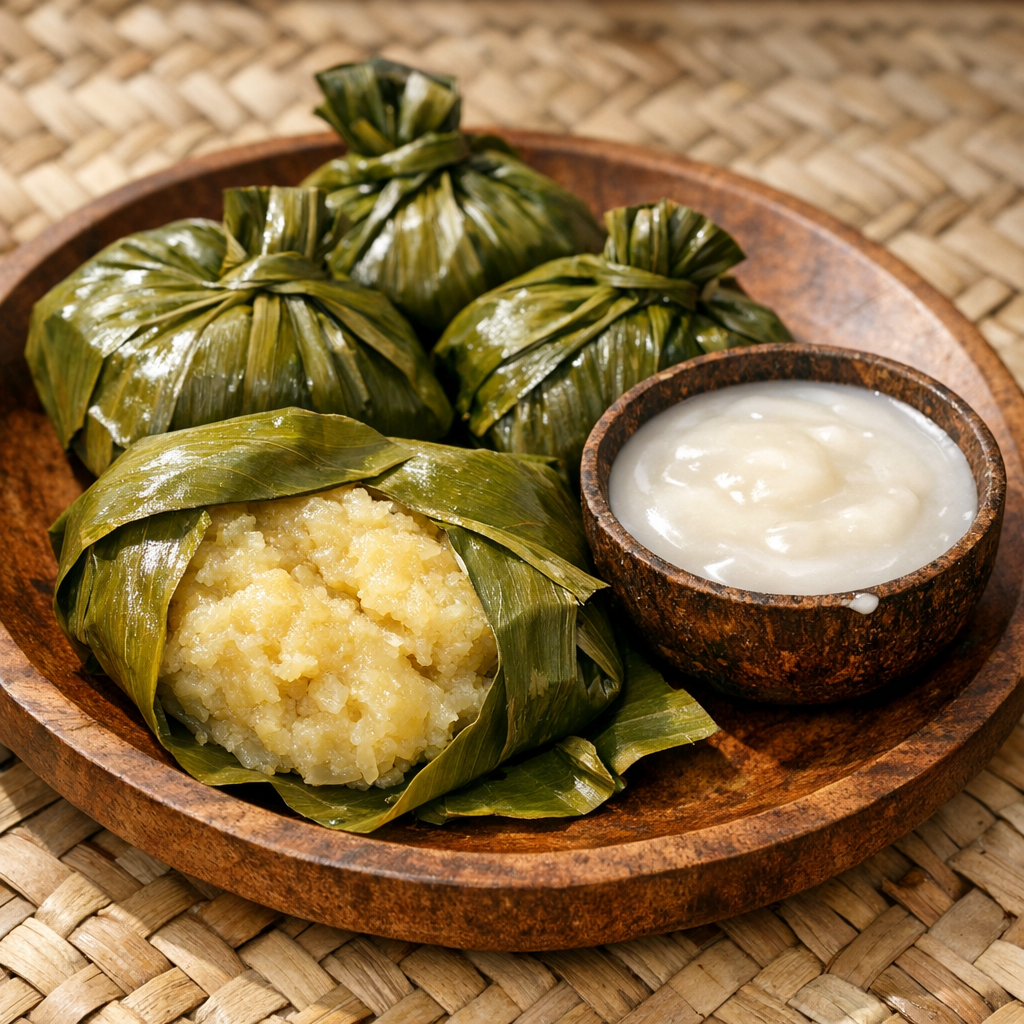
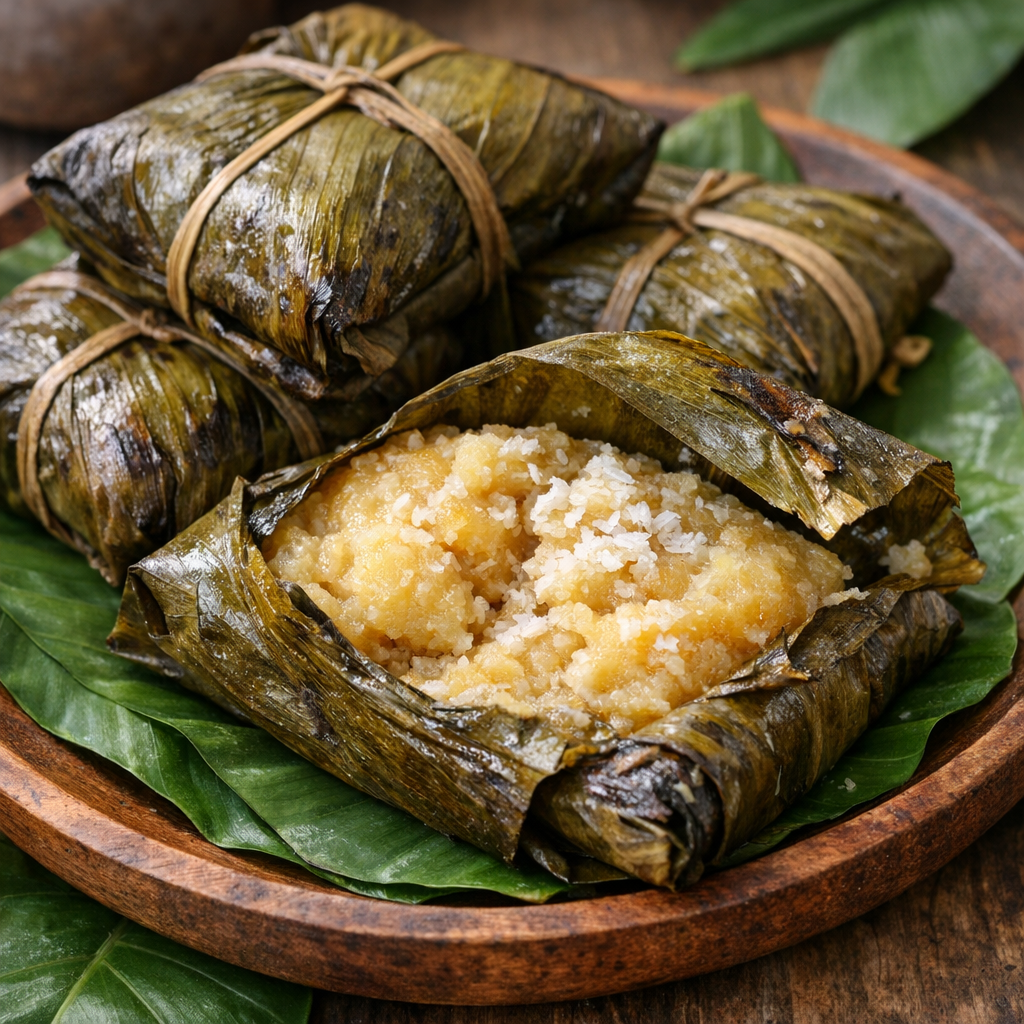
    Fekei ulu comes from the linked Rotuma breadfruit dessert photo essay and adds one of the most recognizable Rotuman sweets still missing from the archive. It also gives the breadfruit cluster a true dessert lane instead of keeping ulu only in savory dishes.

    If you enjoy this style of Pacific cooking, you may also want to try fekei uhi, koon breadfruit.

    Ingredients

    • 1 medium ripe breadfruit
    • 1 cup sugar
    • 3 fresh coconuts, grated and squeezed for milk
    • Banana leaves or foil for wrapping

    Instructions

    1. Cook or steam the breadfruit until soft enough to mash.
    2. Mash the breadfruit well into a smooth heavy mixture.
    3. Wrap portions in banana leaves or foil and cook until fully set and heated through.
    4. Meanwhile, cook the fresh coconut milk with sugar, stirring steadily, until it becomes a sweet caramel-like sauce.
    5. Serve the warm breadfruit dessert dipped in or topped with the sweet coconut sauce.

    Helpful Tips

    • Use ripe breadfruit for a softer, sweeter dessert texture.
    • Stir the coconut sauce constantly so it does not scorch.

    FAQ

    Is fekei ulu eaten plain or with sauce?

    It is usually served with a sweetened coconut sauce poured over or used for dipping.

    Can it be reheated later?

    Yes. Leftover fekei reheats well and is often enjoyed warm again.

    Nutrition Facts (per serving)

    NutrientAmount per Serving
    Calories286 kcal
    Fat10.6 g
    Saturated Fat5.8 g
    Carbohydrates38 g
    Protein11.3 g
    Sodium656.5 mg
    Cholesterol32.6 mg
  • Biscuits in Coconut Milk Recipe

    Biscuits in Coconut Milk Recipe

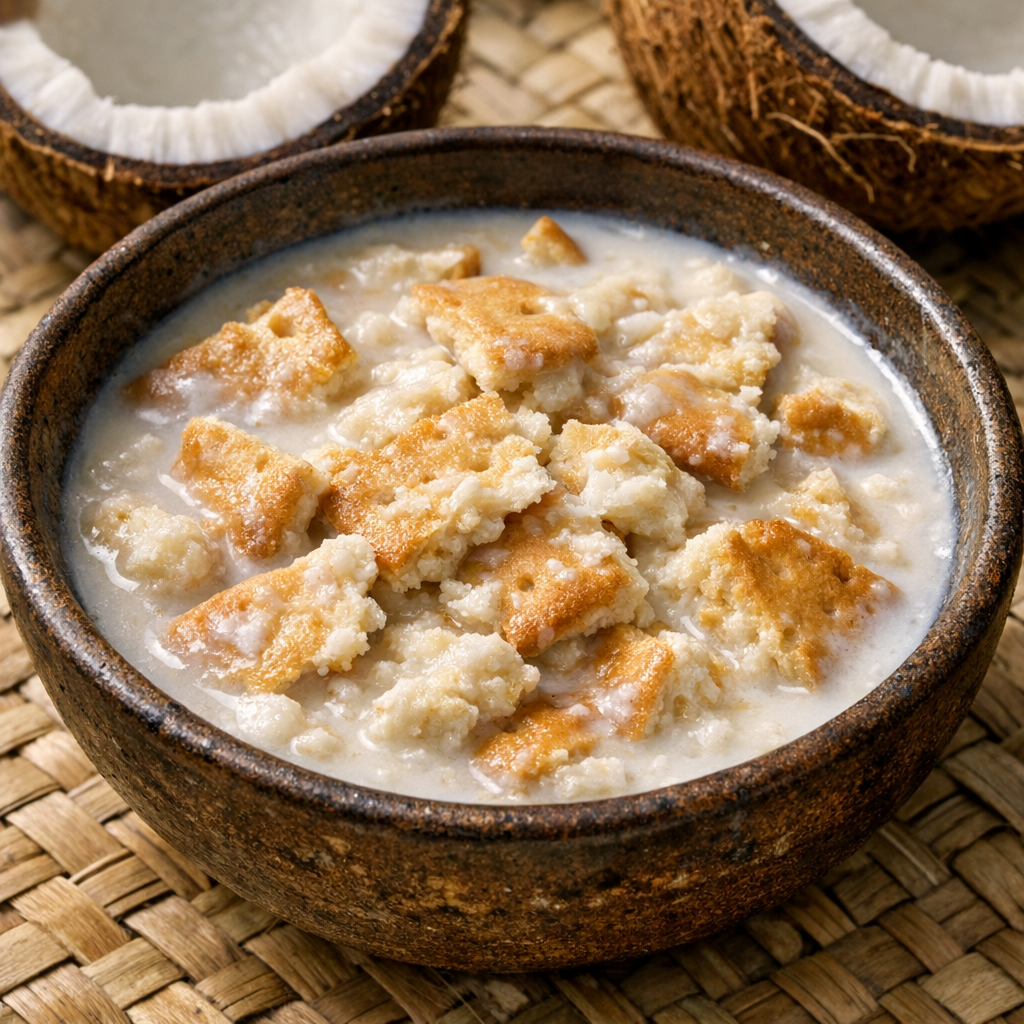
    Biscuits in coconut milk comes straight from the Rotuma archive, where it is described as a favorite after long days of sport and work. It adds a practical island snack to the site and shows how simple pantry foods are often turned into something special with fresh lolo.

    If you enjoy this style of Pacific cooking, you may also want to try faraoa funpana, pia niue.

    Ingredients

    • 2 pounds hard plain biscuits
    • 2 fresh coconuts, grated and squeezed for cream
    • 2 to 3 tablespoons sugar
    • A little water, if needed, to loosen the coconut cream

    Instructions

    1. Grate the coconuts and squeeze out the cream to make fresh lolo.
    2. Add a little water if needed so the coconut cream is rich but pourable.
    3. Stir in sugar to taste.
    4. Break the biscuits into bite-sized pieces and place them in a bowl.
    5. Pour the sweetened coconut cream over the biscuits and serve before they become soggy.

    Helpful Tips

    • Use firm plain biscuits so they hold their shape when soaked.
    • Serve right away to keep the texture soft but not mushy.

    FAQ

    Should the biscuits be fully soaked?

    No. The Rotuma version works best when the biscuits soften slightly but still keep some structure.

    Can canned coconut milk be used?

    Yes, though fresh squeezed coconut cream gives the richest result.

    Nutrition Facts (per serving)

    NutrientAmount per Serving
    Calories105 kcal
    Fat9.3 g
    Saturated Fat5.6 g
    Carbohydrates22.8 g
    Protein15.4 g
    Sodium553.6 mg
    Cholesterol25.6 mg
  • Guava Jelly Recipe

    Guava Jelly Recipe

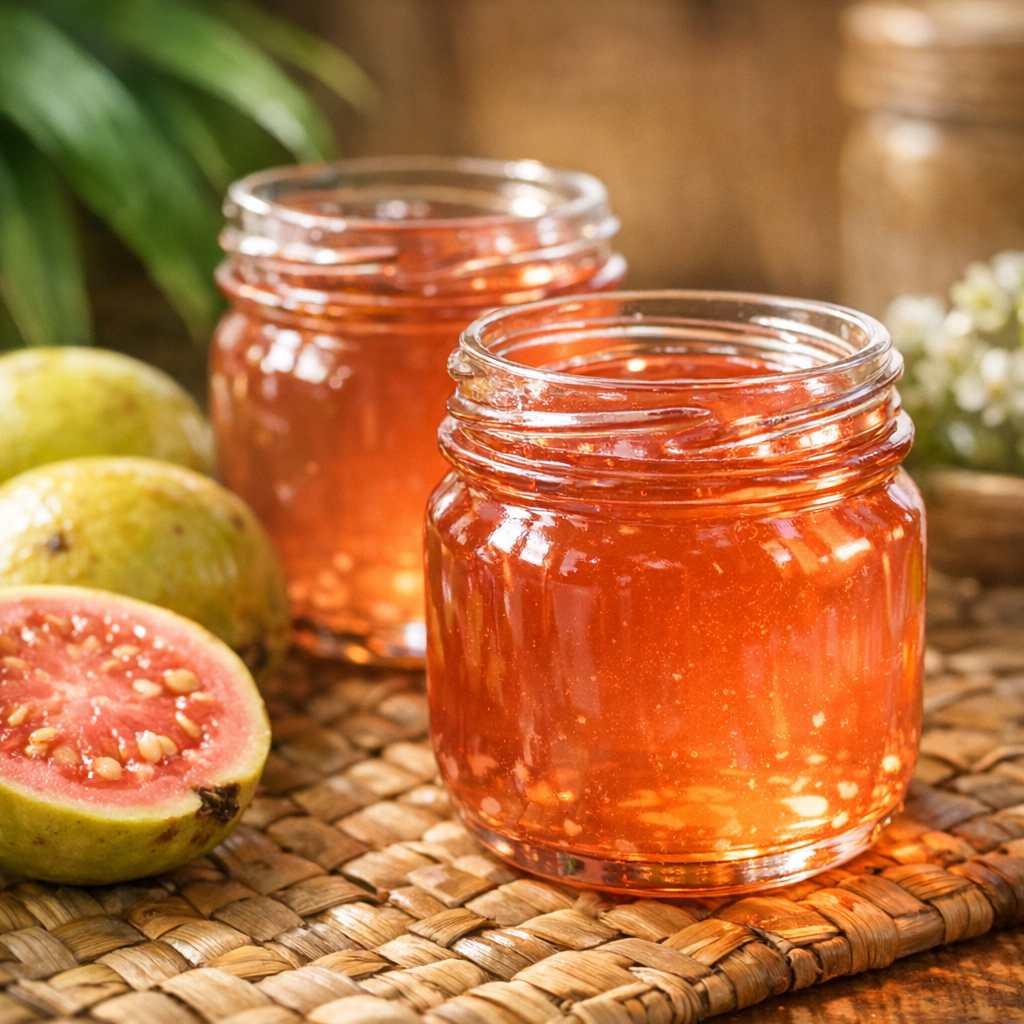
    This guava jelly recipe follows the Rotuma archive method where the whole fruit is cooked first and then strained overnight for a clear jelly. It gives the site a cleaner preserve counterpart to guava jam and keeps the archive grounded in real Pacific fruit preservation.

    If you enjoy this style of Pacific cooking, you may also want to try guava jam, po’oi vi.

    Ingredients

    • 8 cups ripe guavas
    • 4 cups brown sugar
    • 1 cup lemon juice
    • Water as needed to cover the fruit
    • Sterilized jam jars

    Instructions

    1. Wash the guavas, cut them up, and place them in a heavy saucepan.
    2. Add enough water to cover the fruit and boil until it is very soft and mushy.
    3. Pour the mixture into a muslin cloth and leave it suspended overnight so the juice can drip into a clean bowl.
    4. Do not squeeze the cloth if you want a clear jelly.
    5. The next day, cook the strained juice with brown sugar and lemon juice until a little dropped on a wet saucer begins to gel.
    6. Pour the hot jelly into sterilized jars and seal.

    Helpful Tips

    • Letting the juice drip naturally keeps the jelly clearer.
    • A wide heavy pan helps the jelly reduce evenly.

    FAQ

    Why leave the fruit to drip overnight?

    The overnight drip gives you clear juice for a transparent jelly instead of a cloudy one.

    Can I squeeze the bag to get more juice?

    You can, but the jelly will be cloudier.

    Nutrition Facts (per serving)

    NutrientAmount per Serving
    Calories1434 kcal
    Fat10.9 g
    Saturated Fat0.1 g
    Carbohydrates308.8 g
    Protein25.9 g
    Sodium71.3 mg
    Cholesterol9 mg
  • Guava Jam Recipe

    Guava Jam Recipe

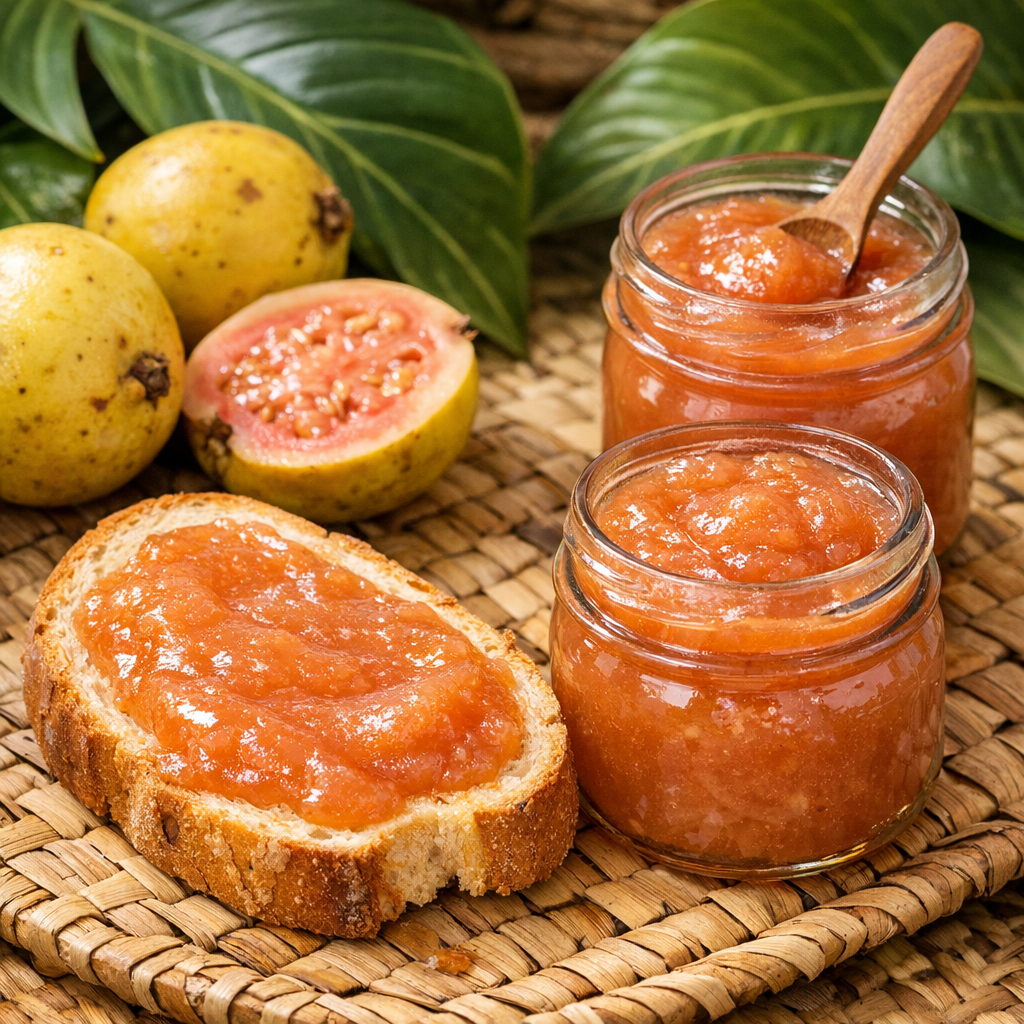
    This guava jam recipe comes from the Rotuma recipe archive at the University of Hawai’i and gives the site a practical Pacific preserving recipe, not just another dessert. It keeps the preserve rooted in island fruit seasons and the way families stock up when guavas are plentiful.

    If you enjoy this style of Pacific cooking, you may also want to try guava jelly, po’oi vi.

    Ingredients

    • 8 cups ripe guavas
    • 4 cups brown sugar
    • 1 cup lemon juice
    • Water as needed to cover the fruit
    • Sterilized jam jars

    Instructions

    1. Peel the guavas, quarter them, and scrape out the seeds.
    2. Wash the fruit and place it in a heavy saucepan with just enough water to cover it.
    3. Boil until the guava is soft and pulpy, then measure the fruit mixture.
    4. For each cup of fruit mixture, use an equal amount of brown sugar and add the lemon juice.
    5. Boil the mixture, stirring regularly, until a little dropped on a wet saucer begins to gel.
    6. Pour the hot jam into sterilized jars and seal tightly.

    Helpful Tips

    • Do not overcook the jam or it can set too hard once cool.
    • Using very ripe yellow guavas gives the best flavor and color.

    FAQ

    Do you keep the guava seeds in the jam?

    No. In the Rotuma method, the outer skin and seeds are removed before the jam is cooked.

    Why add lemon juice?

    Lemon juice helps the jam set and balances the sweetness of the fruit.

    Nutrition Facts (per serving)

    NutrientAmount per Serving
    Calories1434 kcal
    Fat10.9 g
    Saturated Fat0.1 g
    Carbohydrates308.8 g
    Protein25.9 g
    Sodium71.3 mg
    Cholesterol9 mg
  • Banana Leaf Yam Parcels Recipe

    Banana Leaf Yam Parcels Recipe

    Banana leaf yam parcels give the site another banana-leaf cooking page centered on root crops instead of fish or shrimp. It rounds out the archive with a preparation style that feels more traditionally island than a standard oven casserole.

    If you enjoy this style of Pacific cooking, you may also want to try fekei uhi, banana leaf fish.

    Ingredients

    • 3 cups yam, grated or mashed
    • 3/4 cup coconut cream
    • 1/2 onion, finely chopped
    • 1 tablespoon butter
    • Banana leaves for wrapping
    • Salt to taste

    Instructions

    1. Mix the yam with coconut cream, onion, butter, and salt.
    2. Spoon portions onto softened banana leaves.
    3. Wrap into neat parcels.
    4. Steam or bake until the parcels are firm and cooked through.
    5. Serve hot inside or alongside the leaf wrap.

    Helpful Tips

    • Warm the banana leaves briefly so they fold without tearing.
    • Do not overfill the parcels.

    FAQ

    Can taro be used instead of yam?

    Yes, though yam keeps this version distinct from taro parcel dishes.

    Should the leaves be eaten?

    No, the leaves are for wrapping and aroma rather than eating.

    Nutrition Facts (per serving)

    NutrientAmount per Serving
    Calories505 kcal
    Fat40.4 g
    Saturated Fat23.9 g
    Carbohydrates39.4 g
    Protein41.6 g
    Sodium8577.2 mg
    Cholesterol110.3 mg
  • Palou Sami Rice Recipe

    Palou Sami Rice Recipe

    Palou sami rice helps the site cover more rice-based Pacific comfort dishes, especially from Samoa where rice often sits beside richer meat and coconut dishes. It gives the archive another pantry-friendly everyday page.

    If you enjoy this style of Pacific cooking, you may also want to try tuna coconut rice, sapasui.

    Ingredients

    • 2 cups rice
    • 1 tablespoon oil
    • 1/2 onion, chopped
    • 2 cloves garlic, minced
    • 3 cups chicken stock
    • 1 tablespoon soy sauce
    • Salt and pepper to taste

    Instructions

    1. Cook the onion and garlic in oil until fragrant.
    2. Add the rice and stir briefly.
    3. Pour in the stock and soy sauce.
    4. Cover and cook until the rice is tender.
    5. Fluff and serve hot.

    Helpful Tips

    • Rinse the rice before cooking for a cleaner finish.
    • Use stock instead of water for fuller flavor.

    FAQ

    Is palou sami usually eaten with meat dishes?

    Yes, it works especially well with grilled or stewed island mains.

    Can vegetables be added?

    Yes, though a simpler seasoned rice is often the classic base.

    Nutrition Facts (per serving)

    NutrientAmount per Serving
    Calories349 kcal
    Fat11.9 g
    Saturated Fat2 g
    Carbohydrates71.4 g
    Protein30.9 g
    Sodium77.2 mg
    Cholesterol98 mg
  • Faikakai Esi Recipe

    Faikakai Esi Recipe

    Faikakai esi adds another clearly named Tongan dessert and gives the fruit-dessert side of the archive more depth. It helps the site cover island papaya in a softer dessert format rather than only salads and savory dishes.

    If you enjoy this style of Pacific cooking, you may also want to try faikakai topai, pawpaw coconut salad.

    Ingredients

    • 3 cups ripe papaya, diced
    • 1 cup coconut cream
    • 1/3 cup sugar
    • 1 tablespoon cornstarch
    • 1 pinch salt

    Instructions

    1. Cook the papaya gently until it softens.
    2. Stir in coconut cream, sugar, and salt.
    3. Mix cornstarch with a little water and add it to the pot.
    4. Cook until lightly thickened.
    5. Serve warm or chilled.

    Helpful Tips

    • Use ripe but not mushy papaya for the best texture.
    • Do not boil hard once the coconut cream is added.

    FAQ

    Is this very sweet?

    It is gently sweet rather than heavily sugary.

    Can it be chilled?

    Yes, it firms up nicely after cooling.

    Nutrition Facts (per serving)

    NutrientAmount per Serving
    Calories177 kcal
    Fat6.5 g
    Saturated Fat5.6 g
    Carbohydrates66.7 g
    Protein7.3 g
    Sodium6469.1 mg
    Cholesterol0 mg